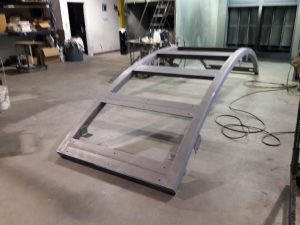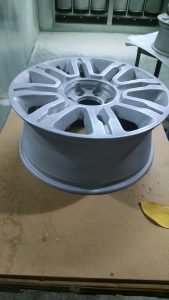


Sand Blasting
As a cleaning method, it is often used for priming a surface for the application of paint or a sealant.
When painting, one doesn’t want to trap dust, dirt, or bubbles in a previous layer of paint, or other imperfections under the new layer.
By launching small bits of abrasive at the surface at a high speed, all imperfections are knocked loose and can then be easily washed off,
creating an incredibly smooth surface upon which to lay the new layer of paint.
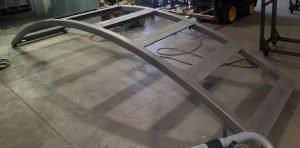
Blasting Methods
Bead Blasting
Bead blasting is the process of removing surface deposits by applying fine glass beads at a high pressure without damaging the surface.
It is used to clean calcium deposits from pool tiles or any other surfaces, and removes embedded fungus and brightens grout color. This process is notably used as an efficiently popular way to clean tile surfaces in swimming pools. It is also used in autobody work to remove paint.
Micro-abrasive Blasting
Micro-abrasive blasting is dry abrasive blasting process that uses small nozzles (typically 0.25 mm to 1.5 mm diameter) to deliver a fine stream of abrasive accurately to either a small part (mm size) or a small area on a larger part. Generally the area to be blasted is from about 1 mm to only a few cm at most. Also known as pencil blasting, the fine jet of abrasive is accurate enough to write directly on glass and delicate enough to cut a pattern in an eggshell. The abrasive media particle sizes range from 10 micrometers up to about 150 micrometers. Higher pressures are often required. The abrasive media is generally not recycled, since the particles tend to shatter on impact or lose their sharp edges.
The most common micro-abrasive blasting systems are commercial bench-mounted units consisting of a power supply and mixer, exhaust hood, nozzle and gas supply. The nozzle can be hand-held or fixture mounted for automatic operation. Either the nozzle or part can be moved in automatic operation.